A dedicated courier vehicle is a single vehicle and driver assigned exclusively to your consignment for the entire move, with no co-mingling, no hub sorting, and no shared drops. If your goods cannot afford a delay, a missed connection, or a stranger’s hands, that exclusivity is the point. For most urgent or high-value UK business shipments, a dedicated delivery service is the right call. For a standard non-urgent parcel that can wait 24–48 hours, a networked express carrier will cost less.
Three things that matter to buyers:
- Speed and predictability. A direct drive courier goes from your door to the recipient’s without detours. Collection windows of an hour or two are typical with reputable providers.
- Security and chain of custody. One vehicle, one driver, one consignment. Fewer handling points means fewer opportunities for loss or damage.
- Single accountability. If something goes wrong, there is one provider to call, not a chain of hubs pointing at each other.
Book a dedicated vehicle when the cost of delay or loss outweighs the premium over shared services. For everything else, shared or express options are usually sufficient.
Key takeaways
A dedicated courier vehicle assigns one vehicle and one driver exclusively to your consignment for a direct, uninterrupted move from collection to signed delivery.
| Point | Details |
|---|---|
| Exclusivity is the defining feature | One vehicle, one driver, one consignment — no hub stops, no co-mingling, no shared drops. |
| Book dedicated for urgent or high-value loads | Use dedicated transport when delay cost, security risk, or chain-of-custody requirements outweigh the premium. |
| Specify the vehicle correctly | Confirm vehicle type, capacity, tail lift, and equipment in writing before dispatch to avoid on-site failures. |
| Require signed POD and GIT insurance | Insist on electronic POD with a timestamp and confirm GIT limits match your declared consignment value. |
| Frphaulage collects within a 1 to 2 hour window | Frphaulage provides 24/7 dedicated courier cover across the UK with signed POD and vetted drivers on every job. |
Table of Contents
- What exactly is a dedicated courier vehicle?
- How a dedicated courier job works from booking to delivery
- Which vehicle types suit which loads?
- When should you use a dedicated courier?
- Key benefits of dedicated transport and how it changes your risk profile
- Choosing a dedicated courier: what to check before you brief
- How dedicated courier jobs are priced in the UK
- Booking channels, tracking and proof-of-delivery practices
- How Frphaulage operates dedicated courier jobs
- What operations teams consistently get wrong about dedicated transport
- Frphaulage: same-day dedicated courier across the UK
- Sources
What exactly is a dedicated courier vehicle?
Dedicated delivery assigns a single vehicle and driver exclusively to one customer’s freight for the entire move, with no co-mingling or terminal handoffs. The driver collects your goods, loads them, and drives directly to the destination. The vehicle does not stop at a sorting hub, does not pick up another customer’s freight en route, and does not hand off to a regional sub-carrier.
A dedicated courier service reserves a vehicle for your consignment and moves it directly from collection to delivery without transfers. The vehicle is yours for the duration of the job.
That is the operational difference that separates dedicated from every other courier model. A standard networked courier collects from multiple customers, consolidates at a hub, sorts, and re-delivers via a local driver who may never have touched your parcel before. Less-than-truckload (LTL) freight works similarly: your pallet shares space with others and may be transhipped two or three times. Both models are cost-efficient for non-urgent freight. Neither gives you the chain of custody that a dedicated vehicle does.
The industry term you will encounter in supplier contracts is “dedicated delivery service” or “dedicated transport.” Informally, operators also use “direct drive courier” or “point to point courier” to describe the same model: one origin, one destination, no stops in between.
Rule of thumb: if your consignment is time-critical, high-value, temperature-sensitive, or legally requires an unbroken chain of custody, book dedicated. If it is none of those things, shared services are almost always cheaper and adequate.
How a dedicated courier job works from booking to delivery
The process is straightforward, but the details you supply at booking determine whether the job runs cleanly or generates calls mid-transit.
The five operational steps
- Booking and brief. You contact the provider by phone, online portal, or API. You supply the collection and delivery addresses, consignment dimensions and weight, required time window, contact names at both ends, and any special handling instructions (fragile, temperature-controlled, high-value).
- Vehicle and driver allocation. The provider matches a vehicle to your load and dispatches a driver. With a reputable same-day operator, this happens within minutes of the booking being confirmed.
- Collection and checks. The driver arrives, verifies the consignment against the booking details, and loads it. Any discrepancy in count, condition, or dimensions should be flagged before departure, not after.
- Direct transit. The vehicle travels directly to the delivery address. No detours, no additional collections, no hub stops.
- Delivery and signed POD. The driver delivers to the named recipient and obtains a signed Proof of Delivery (POD), either on paper or electronically. The POD is the legal record that the consignment arrived intact.
What to supply at booking
- Exact dimensions and weight (including packaging)
- Collection and delivery postcodes and any access restrictions (height barriers, loading bay hours, security sign-in)
- Contact names and mobile numbers at both ends
- Required delivery window or hard deadline
- Declared value and insurance limit required
- Any special handling: temperature range, fragile, hazardous, sealed consignment
- Whether a tail lift, pallet truck, or other equipment is needed
Pro Tip: For production-critical parts, include serial numbers in the booking notes and instruct the driver to keep the vehicle locked at all times. Request photographic POD alongside the signature. If a part goes missing, you will have a timestamped record of exactly what was loaded and what was delivered, which cuts reconciliation time significantly.
For temperature-sensitive loads, require the provider to share temperature logs or permit a third-party tamper-evident trace before the vehicle departs. Premium dedicated providers treat this as standard practice.
Which vehicle types suit which loads?
Matching your load to the right vehicle is the single most common briefing error. Over-sizing wastes money; under-sizing means the driver cannot take the job or, worse, arrives and cannot load.
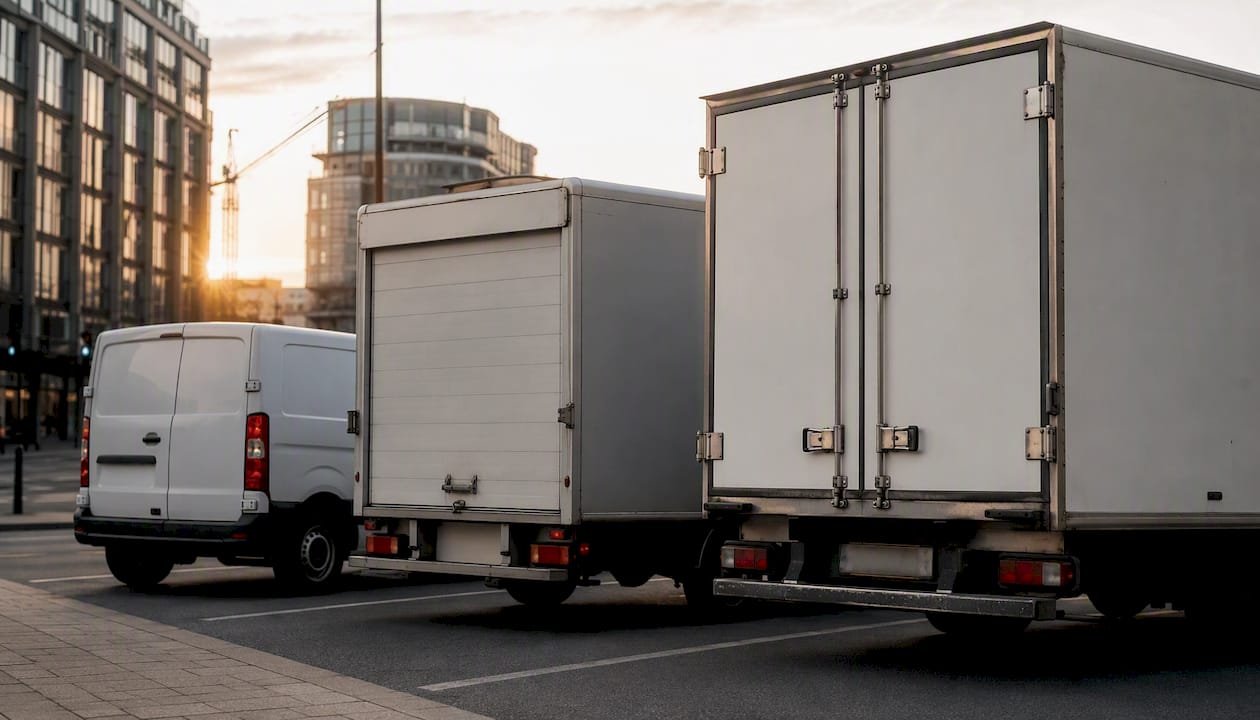
| Vehicle type | Typical payload | Best suited to |
|---|---|---|
| Small van (e.g. Ford Transit Connect) | Small van, a few pallets | Documents, small parcels, urgent parts |
| Transit/Luton van | Medium van, several pallets | Event kit, retail stock, medical equipment |
| Box truck (7.5 tonne) | Large van, multiple pallets | Manufacturing components, bulk retail |
| Curtain-side truck | Rigid truck, many pallets | Large freight, construction materials |
| Refrigerated van | Varies by body size | Pharmaceuticals, food, temperature-sensitive goods |
Capacities are illustrative guidance only. Confirm exact specifications with your provider at booking.
Special equipment to request when relevant:
- Tail lift for heavy items that cannot be hand-balled
- Pallet truck for warehouse-to-warehouse moves without forklift access
- Load bars and straps for securing mixed or irregular loads
- Furniture blankets for fragile or high-value items
- Temperature monitoring for pharmaceutical or food-grade consignments
- Sealed or locked body for high-value or legally sensitive goods
Dedicated delivery lets customers add vehicles and trained drivers to their operations without recruiting or operating their own fleet. That flexibility is why many logistics managers treat dedicated transport as an extension of their own fleet rather than a separate service category.
When should you use a dedicated courier?
Dedicated transport earns its premium in specific scenarios. The question is not whether it is faster than a networked courier (it almost always is), but whether the speed and exclusivity justify the cost for your particular load.
Common UK business use cases where dedicated is the right choice:
- Manufacturing line parts. A production stoppage costs far more per hour than a dedicated vehicle. When a critical component fails and the line goes down, a direct drive courier is the only option that guarantees a known arrival time.
- Medical and pharmaceutical supplies. Hospitals, clinics, and pharmacies often need urgent deliveries of controlled drugs, blood products, or surgical equipment. Chain of custody and temperature control are non-negotiable.
- Legal documents. Court bundles, signed contracts, and deeds with hard deadlines cannot be re-sent if they miss a cut-off. A point to point courier with signed POD provides the audit trail.
- Event equipment. AV kit, staging, or exhibition materials that must arrive before a fixed show time cannot be rescheduled. A missed delivery means a cancelled event.
- High-value retail stock. Jewellery, electronics, and luxury goods that cannot be left in a shared vehicle overnight or handled by multiple operatives.
- Palletised urgent freight. When a full pallet needs to move same-day across regions and LTL services cannot guarantee the time window.
Dedicated delivery vehicles provide exclusive fleet access that delivers predictability, secure handling and real-time visibility for organisations with frequent or mission-critical needs. That predictability is what makes dedicated the default choice for procurement teams managing SLA-driven supply chains.
Regulatory and handling considerations also push buyers towards dedicated transport. Temperature-controlled pharmaceuticals require an unbroken cold chain. Certain legal documents require a witnessed handover. Hazardous goods may require a vehicle configured and placarded for that specific load class.
Key benefits of dedicated transport and how it changes your risk profile
The case for dedicated is straightforward. The risk profile shift is less often discussed.
Benefits:
- Speed. Direct transit with no hub stops means the fastest possible point-to-point journey time.
- Predictability. You know which vehicle is carrying your goods, who the driver is, and where they are at any given moment.
- Reduced handling. Fewer hands on the consignment means fewer opportunities for damage, loss, or substitution.
- Single accountability. One provider owns the job from collection to POD. There is no ambiguity about where a problem occurred.
- White-glove options. Dedicated vehicles can be liveried, driven by uniformed staff, and briefed on client-specific handling protocols.
How the risk profile changes:
Exclusivity concentrates dependency. If the allocated vehicle breaks down or the driver is involved in an incident, your consignment stops. With a networked courier, a delay at one hub is absorbed by the system. With a dedicated vehicle, there is no system to absorb it.
Mitigation tactics to build into your service brief:
- Require the provider to confirm contingency transport arrangements before the job starts.
- Ask whether the provider operates their own fleet or relies entirely on a partner network, and what the escalation process is if the primary vehicle fails.
- Confirm Goods-in-Transit (GIT) insurance limits before booking. Standard GIT cover may not match the declared value of high-value consignments.
- For critical jobs, agree an escalation contact at director level, not just the dispatch desk.
Choosing a dedicated courier: what to check before you brief
A provider who cannot answer these questions clearly is not ready for a production-critical or high-value job.
Procurement checklist
- Collection window. What is the guaranteed collection time from booking confirmation? 60–120 minutes is the industry benchmark for same-day dedicated jobs.
- Vehicle fit. Can they confirm the right vehicle type and capacity for your load before dispatch?
- Signed POD. Is electronic or paper POD standard, and can they send it to you within a defined window after delivery?
- Real-time tracking. Can you monitor the vehicle’s location during transit, and do they send proactive ETAs?
- Goods-in-Transit insurance. What is the standard GIT limit, and can it be increased for high-value loads?
- Driver vetting. Are drivers employed or subcontracted? What background checks are standard?
- 24/7 availability. Can they dispatch out of hours, at weekends, and on bank holidays?
- Escalation contacts. Who do you call if the driver goes off-route, misses the delivery window, or the vehicle breaks down?
Questions to ask potential providers
- What is your SLA for collection from booking confirmation?
- What happens if the allocated vehicle is unavailable after dispatch?
- In what format is POD provided, and how quickly after delivery?
- Do you cover the full UK, or are there regions served only by partners?
- What certifications or compliance checks do your drivers hold?
For a detailed procurement framework, the same-day courier selection guide from Frphaulage covers the key criteria and questions to include in an RFP.
Red flags
- No verifiable GIT insurance documentation
- Vague or verbal POD process with no electronic record
- No real-time tracking or driver location updates
- Collection windows quoted as “as soon as possible” with no SLA
- No named escalation contact beyond the general dispatch line
How dedicated courier jobs are priced in the UK
Dedicated transport is priced per job, not per kilogram. The main cost drivers are:
- Distance. The primary variable. A 50-mile urban run and a 300-mile national move are priced very differently.
- Vehicle type. A small van costs less than a Luton or a 7.5-tonne box truck.
- Urgency and time of day. Same-day and out-of-hours jobs carry a premium over next-day or pre-booked runs.
- Waiting time. If the driver has to wait at collection or delivery beyond an agreed window, additional hourly charges apply.
- Number of stops. A true dedicated job is single origin to single destination. Each additional drop adds cost.
- Security requirements. Sealed vehicles, escorted transport, or specialist handling add to the base rate.
- Fuel surcharges. Most providers apply a variable fuel surcharge linked to current pump prices.
What to require in a quote
Before comparing quotes, confirm each one includes: vehicle type and capacity, driver hours covered, fuel surcharge basis, GIT insurance level, any waiting-time charge structure, and the contingency fee if the job overruns.
Illustrative pricing scenarios (examples only — actual quotes will vary)
| Scenario | Vehicle | Indicative factors |
|---|---|---|
| Short urban same-day | Small van | Distance, urgency premium, collection window |
| Regional multi-drop | Transit/Luton | Distance, multiple stops, driver hours |
| Long-distance urgent pallet move | 7.5-tonne box | Distance, vehicle size, tail lift, out-of-hours |
These are illustrative examples only. Request a firm quote from your provider based on your specific load, route, and time window.
Booking channels, tracking and proof-of-delivery practices
How to book
Most UK dedicated courier providers offer three booking channels:
- Phone. The fastest route for urgent jobs. A good operator will confirm vehicle allocation within minutes and give you a driver name and ETA before the call ends.
- Online portal. Suitable for pre-planned or recurring jobs. You enter consignment details, get a quote, and confirm. Tracking links are usually generated automatically.
- API or EDI integration. For high-volume accounts, automated booking removes manual data entry and feeds directly into your TMS or ERP. Providers frequently pair dedicated vehicles with EDI/API integration options for high-volume customers to automate booking and tracking.
Tracking expectations
Real-time driver location updates are standard with reputable providers. You should expect:
- A confirmation message with driver details and estimated collection time
- Live GPS tracking during transit
- Proactive ETA updates if the driver is delayed
- An immediate notification on delivery
Proof of delivery
Signed POD is the legal record that your consignment arrived. Electronic POD (ePOD) is now standard across most UK dedicated operators: the recipient signs on a device, and the record is timestamped and emailed to you automatically. For unattended drops, photographic POD (a photo of the goods in situ) is the accepted alternative.
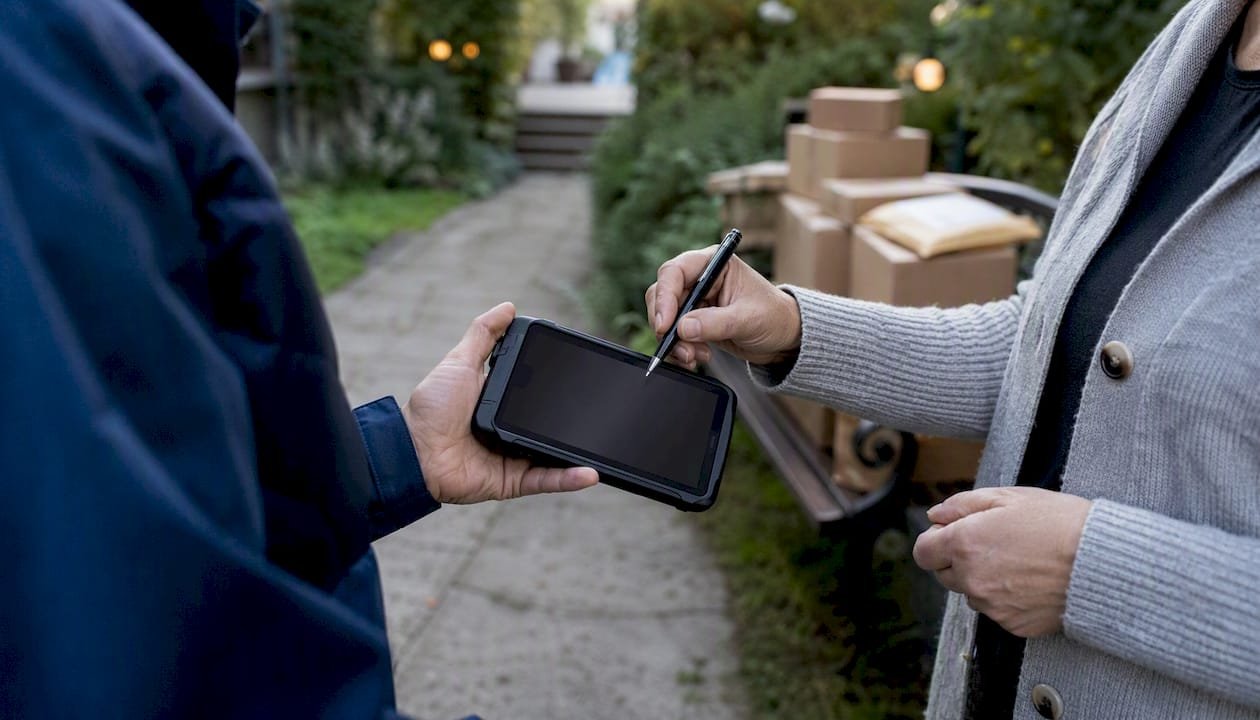
A clear operational SLA covering collection window, escalation contacts, and POD format materially reduces disputes and shortens resolution time after delivery exceptions. Build the POD format and delivery window into your contract, not just the booking confirmation.
How Frphaulage operates dedicated courier jobs
Frphaulage’s operating model for a dedicated job follows a tight sequence: call or online booking → immediate vehicle and driver allocation → collection within 60–120 minutes → direct transit with no intermediate stops → signed POD on delivery. The same-day courier services page sets out the full service scope, including out-of-hours and multi-drop options.
Trust signals built into every Frphaulage dedicated job:
- 60–120 minute collection windows from booking confirmation, 24 hours a day, 365 days a year
- Signed Proof of Delivery on every shipment, electronic or paper
- Vetted driver and partner network covering the full UK
- Goods-in-Transit insurance on all consignments
- 24/7 availability including bank holidays and overnight runs
A manufacturing client needing an urgent component moved from a Midlands supplier to a production facility in the North West can call Frphaulage, confirm vehicle allocation within minutes, and have the part collected and en route within the hour. The signed ePOD lands in their inbox before the production team needs to escalate.
Frphaulage’s combination of a 60–120 minute collection window, vetted drivers, and signed Proof of Delivery on every job gives procurement teams the audit trail and accountability they need for production-critical and high-value consignments.
For procurement teams building an RFP or internal SOP, the complete guide to choosing a same-day courier provides a structured checklist aligned with Frphaulage’s service standards.
What operations teams consistently get wrong about dedicated transport
Most briefing failures come down to one of three things: under-specifying the load, over-trusting verbal assurances, and treating POD as an afterthought.
Under-specifying is the most common. A logistics manager books a “van” without confirming whether it has a tail lift, whether the driver carries a pallet truck, or whether the vehicle body is the right length for the load. The driver arrives and cannot take the job. The production line waits.
Over-trusting verbal assurances is the second. “We’ll get someone there as soon as we can” is not a collection SLA. If your operation depends on a 90-minute collection window, get it in writing before you confirm the booking. The same applies to GIT insurance limits: a standard policy may cover £10,000 per consignment, which is inadequate for a £50,000 electronics shipment.
POD as an afterthought is the third, and it is the one that causes the most disputes. If you do not specify the POD format and delivery window in the contract, you have no enforceable standard to hold the provider to. Electronic POD with a timestamp and recipient name is the minimum. For high-value or legally sensitive goods, add photographic POD and a chain-of-custody note.
Dos:
- Confirm vehicle type, capacity, and equipment in writing before dispatch
- Agree the collection SLA and escalation contact before the job starts
- Specify POD format and delivery window in the contract
- Allow the driver discretion on routing — they know traffic conditions better than a fixed route plan
- For unattended drops, agree photographic POD in advance
Don’ts:
- Do not assume a “van” means the right van for your load
- Do not accept verbal collection windows as SLAs
- Do not book without confirming GIT insurance limits against your declared value
- Do not wait until after a missed delivery to establish an escalation ladder
Frphaulage: same-day dedicated courier across the UK
When a production line is down or a consignment cannot wait until tomorrow, the gap between a provider who answers at 2 AM and one who does not is the entire value of the service.
Frphaulage operates same-day dedicated courier services across the UK, with collection in 60–120 minutes from your call, 24/7/365. Every job comes with signed Proof of Delivery, vetted drivers, and Goods-in-Transit insurance as standard. Whether you need a small van for urgent documents or a Luton for event equipment, the vehicle is allocated to your consignment alone: no shared loads, no hub stops, no handoffs.
For procurement teams who want to brief correctly the first time, the same-day courier procurement guide sets out the checklist and questions to ask any provider. To book a job or get a quote, contact Frphaulage directly via Frphaulage.
Sources
Procurement teams preparing an RFP or internal SOP will find the following pages useful:
- Dedicated Delivery Service in Florida | Comet Delivery
- Dedicated Delivery Service | Excel Courier | Excel Logistics
- Dedicated Delivery Vehicles | The Millennium Group