Parcels move from Great Britain to Northern Ireland every day, and for the vast majority of senders the process is far simpler than the phrase “customs border” suggests. Whether you pay duty, need a declaration, or simply hand a parcel to a courier depends on two things: whether you’re shipping business to consumer (B2C) or business to business (B2B), and whether your carrier or your business holds the right authorisation.
Before you book anything, do three things:
- Classify the shipment. Is this a business sending goods to a private consumer in Northern Ireland, or a business-to-business movement? The rules genuinely diverge here.
- Check carrier authorisation. Confirm whether your courier is registered under the UK Carrier Scheme, or whether you (or your recipient) hold UKIMS authorisation for B2B trade.
- Gather the basics. Sender and recipient details, declared value, weight, and a clear item description. For registered traders, that also means your EORI and UKIMS numbers.
The two names worth trusting from the outset are GOV.UK, whose guidance under the Windsor Framework sets out every rule referenced in this article, and Frphaulage, which handles same-day GB to Northern Ireland deliveries with signed proof of delivery when speed and certainty matter more than the cheapest rate.
Key Takeaways
Compliant GB to Northern Ireland deliveries depend on correctly identifying B2C versus B2B status, confirming scheme authorisation, and supplying accurate shipment data before collection.
| Point | Details |
|---|---|
| Classify before booking | Determine whether the shipment is B2C or B2B, since the rules and required data differ significantly. |
| Confirm carrier authorisation | Check your courier holds UK Carrier Scheme status so eligible B2C parcels avoid duty and full declarations. |
| Know your weight limits | B2C thresholds allow up to 100kg for a single item or 31.5kg for multiple items in one parcel. |
| Assign the responsible party | Agree in writing who holds the EORI or UKIMS number before goods are collected, to prevent delays. |
| Choose speed when it matters | Frphaulage offers 60 to 120 minute collection with signed proof of delivery for urgent or compliance-sensitive Northern Ireland shipments. |
Table of Contents
- What the Windsor Framework changed for parcel senders
- Which schemes actually apply to your shipment?
- What information does your carrier need for GB to Northern Ireland deliveries?
- How long does it take and what drives the cost?
- How do you pick the right carrier for Northern Ireland routes?
- Step-by-step: preparing a parcel for Northern Ireland
- When does a same-day courier make sense for Northern Ireland deliveries?
- Why data ownership matters more than carrier choice
- Get your urgent Northern Ireland delivery moving today
- Where to get help and register for the right scheme
- Frequently asked questions
- Sources
What the Windsor Framework changed for parcel senders
The Windsor Framework overhauled how goods move between Great Britain and Northern Ireland, and the practical shift for parcel senders landed properly from May 2025. The core idea is straightforward: goods staying inside the UK’s internal market shouldn’t need the same paperwork as goods heading into the EU single market, because Northern Ireland sits inside both.
That’s the theory. In practice, it means correspondence, most everyday B2C parcels, and B2B movements handled through UKIMS now avoid full customs declarations altogether. Personal letters, postcards, and printed matter sent from Great Britain to Northern Ireland are fully exempt from the Windsor Framework’s customs requirements, which is worth knowing if you’re a small business sending invoices, contracts, or marketing materials rather than physical goods.
What still needs closer attention are goods that fall outside those simplified routes: high-value commercial consignments without UKIMS backing, controlled goods, and prepacked retail food, which has its own dedicated scheme entirely. The framework didn’t remove customs from the equation. It narrowed the group of shipments that ever have to deal with it.
Which schemes actually apply to your shipment?
Four names come up constantly in GB to Northern Ireland shipping conversations, and confusing them is the single most common reason parcels get delayed. Here’s what each one actually does.
UK Carrier Scheme. This is a courier-level authorisation, not something you as a sender apply for. When your parcel courier is registered under the scheme, they can move eligible B2C parcels as “not at risk” of entering the EU, which strips out the need for customs duty or a full declaration on your side. Authorised operators collect the standard movement data themselves and submit it to HMRC, with timing requirements that vary depending on whether the movement is business to consumer or consumer to consumer.
UKIMS (UK Internal Market Scheme). This one is for businesses, particularly on the B2B side. If you or your Northern Ireland customer hold UKIMS authorisation, eligible goods can move without a full customs declaration and without incurring duty. The catch is that someone in the chain must hold the authorisation and keep supporting records for five years. No UKIMS holder in the transaction usually means a full declaration is required instead.
NIRMS (Northern Ireland Retail Movement Scheme). This applies specifically to prepacked retail food and similar agri-food products. Both the sending business and the receiving business must be registered under NIRMS, and each consignment needs a general certificate and a physical seal. If you’re a food retailer or wholesaler moving stock, this is not optional.
Trader Support Service (TSS). TSS isn’t an authorisation scheme, it’s a free advisory and training resource run to help businesses get declarations right. It’s worth registering with early, even if you’re not shipping frequently yet, because the training covers exactly the errors that cause hold-ups later.
| Scheme | Who it’s for | What it removes |
|---|---|---|
| UK Carrier Scheme | Couriers moving B2C parcels | Duty and full declarations for eligible parcels |
| UKIMS | Businesses trading B2B | Full customs declaration and duty for eligible goods |
| NIRMS | Retail food and agri-food businesses | Need for individual export health certificates per item |
| Trader Support Service | Any business new to declarations | The guesswork around getting paperwork right first time |
What information does your carrier need for GB to Northern Ireland deliveries?
The paperwork burden splits sharply along the B2C/B2B line, and knowing which bucket you’re in saves a lot of back-and-forth with your courier.
For a B2C parcel (a business sending to a private individual), the requirements are genuinely light. Your carrier, if authorised under the UK Carrier Scheme, will typically ask for the recipient’s name and address, the declared value, the weight, and a plain description of the contents. That’s largely it. There’s no need for an EORI number, no commodity code lookup, and no UKIMS reference for a standard consumer parcel that meets the weight limits.
For a B2B movement, expect more detail. GOV.UK’s guidance on information to share with your supply chain lists business name, EORI number, UKIMS number where applicable, total value, weight, item description or commodity code, and country of origin. Where UKIMS authorisation is in place, that same fact sheet on B2B parcel movements confirms this simplified information set replaces a full declaration.
Weight thresholds matter too. For B2C consignments, a single item can weigh up to the maximum allowed for simplified processing, while parcels containing multiple items must stay below a certain weight limit to qualify for the simplified process. Go over those limits and you’re likely looking at a different, more formal customs pathway.
| Field required | B2C parcel | B2B (no UKIMS) | B2B (UKIMS authorised) |
|---|---|---|---|
| Name and address | Yes | Yes | Yes |
| Declared value | Yes | Yes | Yes |
| Item description | Yes | Yes, with commodity code | Yes, simplified description |
| EORI number | Not required | Required | Required |
| UKIMS number | Not applicable | Not applicable | Required |
| Full customs declaration | Not required | Usually required | Not required |
- Keep a standing record of your EORI and UKIMS numbers so they’re ready every time you book a shipment.
- Weigh parcels accurately before booking. Underestimating weight is a common reason consignments get flagged.
- If in doubt about which commodity code applies, ask your carrier before collection rather than after.
How long does it take and what drives the cost?
Standard parcel services between Great Britain and Northern Ireland typically run on a next-day to two-day schedule, similar to mainland UK delivery times, since most eligible parcels no longer face customs hold-ups at the point of movement. Express carriers can often compress that further, and for genuinely urgent needs, a same-day courier collects and delivers within hours rather than days.
Cost is shaped by more than distance. The main drivers worth understanding:
- Weight and dimensions remain the biggest lever on price, exactly as with any UK parcel service.
- Collection urgency costs more. A scheduled next-day collection is cheaper than a courier arriving within the hour.
- Special handling for fragile, high-value, or temperature-sensitive goods adds a premium.
- Import formalities add cost and delay when a shipment falls outside UKIMS or the UK Carrier Scheme’s simplified routes, since a full declaration may be needed and duty could apply on at-risk goods, though GOV.UK does allow claims for repayment or remission in some circumstances.
Using an authorised carrier is genuinely one of the more effective ways to control cost here. When your courier is registered under the UK Carrier Scheme and your parcel meets the B2C thresholds, you sidestep the administrative overhead and potential duty exposure entirely, rather than paying for a declaration you didn’t need to file.
How do you pick the right carrier for Northern Ireland routes?
Not every courier handling UK domestic parcels is set up to move goods into Northern Ireland smoothly, and the gap shows up at the worst possible moment: when a shipment gets stopped because nobody confirmed who was responsible for the paperwork.
Run through this before you commit to a provider:
- Is the carrier authorised under the UK Carrier Scheme? Ask directly. An authorised operator handles the movement data submission on your behalf; an unauthorised one may leave you filing declarations yourself.
- Do they have real experience on GB to Northern Ireland routes, not just a generic “we deliver UK-wide” claim?
- Who takes responsibility for customs data if something’s incomplete? This should be spelled out, not assumed.
- What tracking and proof of delivery do they provide? For business shipments, a signed POD is often the only evidence you have that goods arrived intact and on time.
- How do they handle high-value or sensitive cargo? Insurance terms and handling protocols vary enormously between generic parcel networks and specialist operators.
A red flag worth taking seriously: any carrier who can’t clearly explain whether they or you are responsible for movement information. That ambiguity is exactly what causes delays at the point of collection or arrival.
For most routine parcels, a standard authorised courier does the job. But when you’re moving a single time-critical component, a legal document with a hard deadline, or stock that has to land before a shop opens, that’s when a same-day courier service earns its higher price tag. Speed and certainty become the product, not just the delivery.
Step-by-step: preparing a parcel for Northern Ireland
The workflow differs slightly depending on whether you’re a business or a private individual sending a one-off parcel.
For businesses:
- Confirm whether the shipment is B2C or B2B, since this determines which information set and which scheme applies.
- Check whether you hold an EORI number and, for B2B trade, whether you or your Northern Ireland customer are UKIMS authorised.
- If you’re shipping prepacked retail food, confirm both parties are registered under NIRMS and prepare the general certificate and seal for the consignment.
- Gather item-level details: value, weight, description, and commodity code where required.
- Confirm with your carrier whether they are UK Carrier Scheme authorised and who submits the movement data to HMRC.
- Register with the Trader Support Service if you’re new to declarations, and keep UKIMS records for at least five years.
For private individuals:
- Weigh and value the parcel honestly. Most personal parcels sit comfortably under the B2C thresholds.
- Write a clear, specific description of the contents. “Gift” or “personal item” is not enough detail for a carrier to process quickly.
- Provide accurate sender and recipient addresses and a contact number in case of a query.
- Choose an authorised courier so you’re not asked for customs information you don’t have.
- Keep proof of postage or a tracking reference until delivery is confirmed.
One point that trips up businesses more than anything else: someone has to be the “responsible party”, the entity whose EORI or UKIMS number is attached to the movement. Confirm this in writing with your supply chain partner before goods are collected, not after a query comes back from the courier.
When does a same-day courier make sense for Northern Ireland deliveries?
Standard scheduling works fine for most parcels, but certain situations don’t tolerate a next-day wait. A production line stopped because a replacement part is 200 miles away. A legal document that has to be signed before a court deadline. An event that opens in six hours and the signage hasn’t arrived. A shop that’s about to run out of stock on a Saturday morning.
Frphaulage handles exactly this category of shipment, with collection typically arranged within 60 to 120 minutes of a call, operating 24 hours a day, every day of the year. That immediacy comes from a combination of an owned fleet and a vetted partner network, so capacity doesn’t dry up during peak periods or unsociable hours.
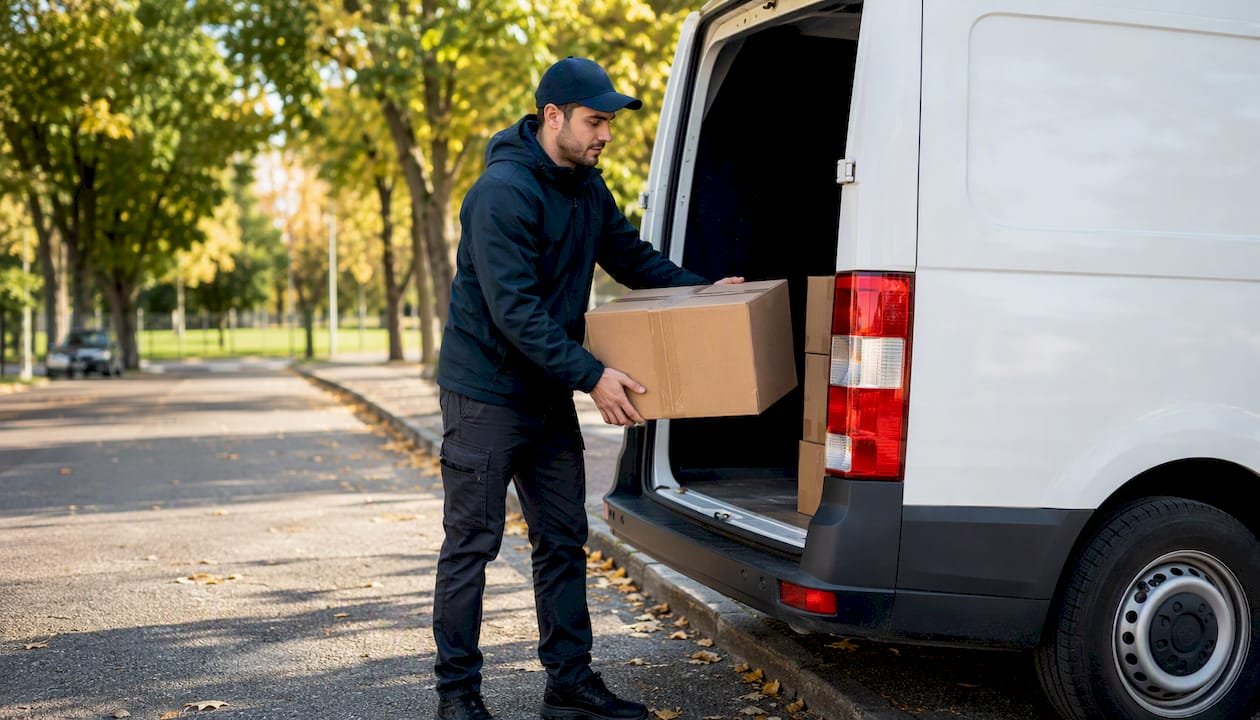
For compliance-sensitive movements, that speed doesn’t come at the expense of the process. Working with an authorised operator still means the correct shipment information gets passed through wherever HMRC or scheme requirements apply, rather than skipping steps to save time. Every collection is backed by a signed proof of delivery, which matters enormously for businesses that need documented evidence goods arrived, whether that’s a manufacturing component, a set of contracts, or high-value cargo requiring specific handling.
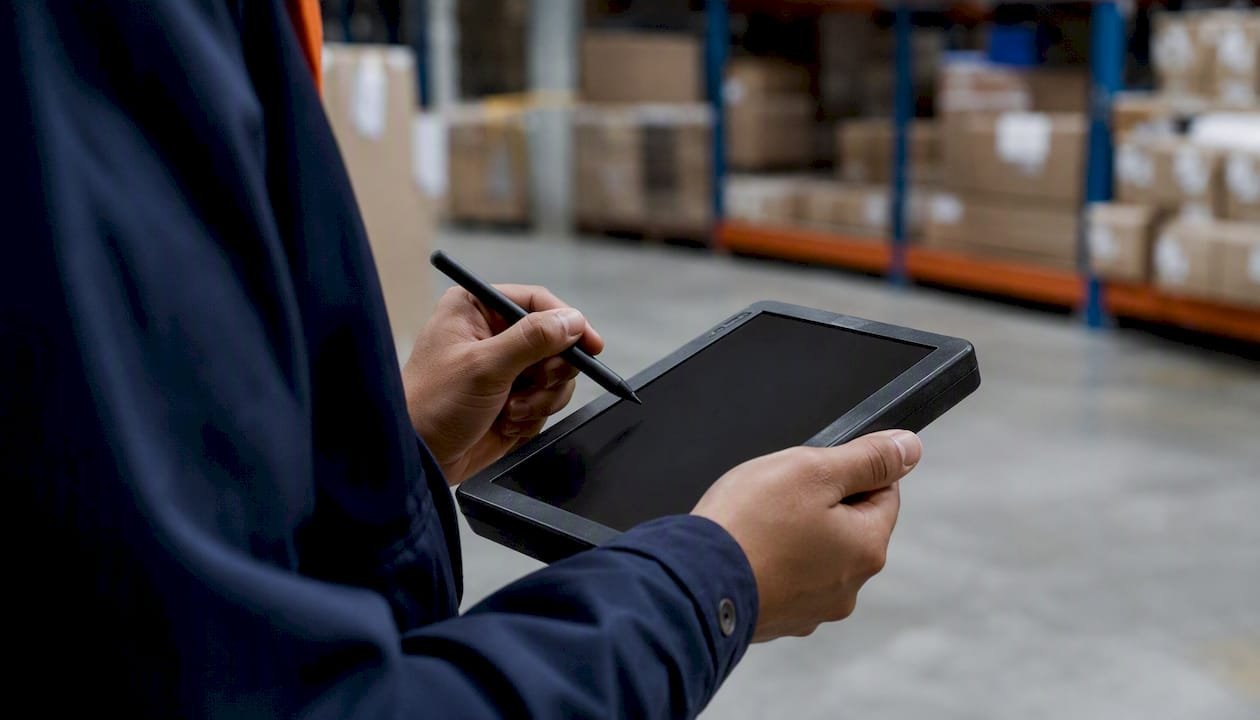
The use cases that come up again and again: urgent manufacturing parts keeping a production line moving, time-critical legal or financial documents, last-minute event logistics, and short-notice stock replenishment when a Northern Ireland outlet can’t wait for the next scheduled delivery run.
Why data ownership matters more than carrier choice
The businesses that handle GB to Northern Ireland shipping well aren’t the ones with the cheapest courier contract. They’re the ones who’ve decided, in advance and in writing, exactly who holds the EORI number, who holds UKIMS authorisation, and who is accountable if a parcel gets flagged. Everyone else treats it as an afterthought, sorted out by whoever picks up the phone when a shipment stalls.
That’s the uncomfortable truth buried in most of the guidance on this topic: the rules themselves have got considerably simpler since the Windsor Framework changes landed, but simpler rules only help you if someone in your business actually owns the process. A courier being authorised under the UK Carrier Scheme doesn’t help if nobody checked that authorisation before booking. UKIMS doesn’t reduce your paperwork if the two businesses in a trade both assume the other one holds the number.
Pro Tip: Before you ever collect a parcel, write down, in one sentence, who the “responsible party” is for that shipment, and confirm it with your supply chain partner in an email you can point back to. This single habit prevents more delays than any amount of scheme knowledge.
There’s also a genuine case for treating urgent shipments differently from routine stock movements, rather than forcing every parcel through the same standard process because that’s what’s always been done. When timing is the actual risk, a specialist same-day operator like Frphaulage that understands both the compliance side and the physical logistics is a more sensible operational partner than trying to expedite a standard courier booking after the fact.
Get your urgent Northern Ireland delivery moving today
If you’ve read this far because a shipment can’t wait for standard transit times, Frphaulage exists for exactly that moment. Collection is arranged within 60 to 120 minutes of your call, any hour of any day, using an owned fleet backed by a vetted partner network so capacity holds up even during unsociable hours or peak periods.
Every job comes with a signed proof of delivery, so you have documented confirmation the parcel arrived, whether it’s a manufacturing component keeping a production line running, a legal document against a deadline, or high-value cargo that needs careful handling throughout the journey. Tracking and clear communication run through the whole process, which matters when a Northern Ireland delivery involves coordinating with a supply chain partner on the other end.
Whether you’re moving a single urgent parcel or need a scheduled account for recurring Northern Ireland runs, the same-day courier service page sets out exactly how booking works and what to expect from collection to signed delivery. Get in touch and describe your shipment, and a same-day slot can be arranged before you’ve finished your coffee.
Where to get help and register for the right scheme
Getting registered or authorised takes a little admin now to save real delays later. These are the direct routes:
- Register for an EORI number and UKIMS authorisation directly through GOV.UK if you’re trading B2B into Northern Ireland.
- Contact the Trader Support Service for free training on declarations, particularly useful if this is your first time shipping into Northern Ireland.
- If you move prepacked retail food, register both sending and receiving businesses under NIRMS before your first consignment.
- Speak to your existing carrier about their UK Carrier Scheme status and ask them directly who submits movement data to HMRC on your shipments.
- Review the Gov for the complete, current rule set before you finalise your process.
This article gives general information on current Windsor Framework arrangements, not professional customs advice. Rules and thresholds can change, so confirm the latest position with GOV.UK or a qualified customs adviser before relying on it for a specific shipment.
Frequently asked questions
Can I still send a parcel from Great Britain to Northern Ireland without any customs paperwork?
For most B2C parcels moved through an authorised courier and within the weight thresholds, yes. Correspondence such as letters and printed matter is fully exempt, and eligible consumer parcels don’t need a full declaration when the carrier holds UK Carrier Scheme status.
Do I need an EORI number to send a personal parcel to Northern Ireland?
No. EORI numbers apply to business movements, particularly B2B trade. A private individual sending a standard consumer parcel doesn’t need one.
What happens if my business doesn’t have UKIMS authorisation?
Without a UKIMS-authorised party in the transaction, your B2B shipment will likely need a full customs declaration, and duty may apply if the goods are considered “at risk” of moving into the EU.
How quickly can a same-day courier deliver from GB to Northern Ireland?
Frphaulage typically arranges collection within 60 to 120 minutes of a call, operating around the clock, with delivery timing depending on the specific route and job.
Is NIRMS relevant to me if I’m not selling food?
No. NIRMS applies specifically to prepacked retail food and similar agri-food goods moving from Great Britain to Northern Ireland retailers. Other goods follow the standard B2C or B2B rules instead.
Sources
- Sending parcels between Great Britain and Northern Ireland under the Windsor Framework
- How to move parcels from Great Britain to Northern Ireland for express operators
- Northern Ireland Retail Movement Scheme: how to register and seal consignments