Valid proof of collection is a signed or timestamped handover record, either a physical signature or its electronic equivalent, or a sealed verification file with a timestamp and reference number. The fastest way to get it is simple: ask for a signed ePOD or a timestamped collection scan when you book, not after the driver has left.
Do these two things before the collector arrives:
- Ask the provider outright to capture a signature or ePOD at the point of handover, and confirm they’ll email you a copy.
- Request a confirmation message containing the timestamp, collection reference, and driver or agent name.
Acceptable proof generally falls into one of these categories:
- A signed receipt or handover note with item description and date.
- A timestamped carrier scan tied to a booking or waybill number.
- A marketplace collection code confirmation (used widely on eBay for local pickups).
Key Takeaways
Verifiable proof of collection depends on requesting a signed ePOD, timestamped scan, or collection code at booking, since strong evidence is rarely captured automatically.
| Point | Details |
|---|---|
| Request proof at booking | Ask for a signed ePOD or timestamped scan before collection, not after the item has gone. |
| Rank evidence by strength | Signatures and sealed records outrank photos or tracking-only scans in any formal dispute. |
| Act fast if proof is missing | Preserve messages and request carrier logs within 24 to 72 hours of a suspected gap. |
| Keep records simple and searchable | Store signed receipts as PDFs with consistent file names and a clear retention period. |
| FRP Haulage issues signed proof by default | Same-day collections within 60 to 120 minutes come with a signed Proof of Delivery as standard. |
Table of Contents
- What is proof of collection and how does it differ from proof of delivery?
- Which forms of collection evidence hold up as proof?
- How do you get proof of collection from marketplaces, Royal Mail, or a courier?
- What should you do if you never receive proof of collection?
- How long does it take to get proof, and does it cost extra?
- How should you store and present proof of collection?
- How does FRP Haulage capture proof of collection on same-day jobs?
- Why insisting on proof at booking beats chasing it afterwards
- Need guaranteed signed proof today?
- Frequently asked questions
- Sources
What is proof of collection and how does it differ from proof of delivery?
Proof of collection (sometimes shortened to POC) is the record confirming an item left your possession and was physically taken by a buyer, courier, or agent. It’s a handover receipt, not a delivery receipt. That distinction trips up a surprising number of sellers, because “proof of collection” and “proof of delivery” get used interchangeably online when they answer completely different questions.
Proof of postage only proves you handed something to a carrier’s network, typically a stamped counter receipt. It says nothing about what happened next. Proof of collection proves a specific person took the item at a specific time and place, which matters most for sellers arranging pickups rather than posting. Proof of delivery (POD) is the mirror image at the other end of the journey. It confirms the item reached its destination, usually captured through signature capture, an ePOD system, or a timestamped scan logged against a tracking number.
For a seller worried about disputes, POC is the document that protects you at the moment the item leaves your hands. If a buyer later claims they never received something they collected in person, the operative question isn’t what the courier’s tracking says. It’s whether you have a signed or scanned record of the handover itself.
Unlike standard tracking, professional proof of delivery often requires a recipient signature or an electronic equivalent to hold up as evidence when goods go missing or arrive damaged. The same logic applies in reverse for collection: without a signature or scan at handover, you have no equivalent evidence that the item ever left your side.
Marketplace platforms have started building this logic into their own systems. eBay’s local collection option uses a unique collection code and scan specifically so both buyer and seller have a record that isn’t just a text message or a memory of what happened at the door.
Worth flagging one unrelated term while we’re here: “proof of concept” is a completely different concept from product development, nothing to do with parcels or handovers. If you land on an article about proof of concept while searching for collection evidence, you’ve taken a wrong turn.
Which forms of collection evidence hold up as proof?
Not all proof is equal, and the gap between “reasonably solid” and “will get laughed out of a dispute” is bigger than most sellers assume. Ranked roughly from strongest to weakest:
- Signed POD or ePOD — a name, signature, date and time captured digitally or on paper at the point of handover.
- Timestamped carrier scan with a collection code — a system-generated record tied to a specific booking, not just a general tracking update.
- Photographic evidence with timestamp and location data — useful, but only as supporting material, not standalone proof.
- Email confirmation referencing a unique booking number — solid if it names the item, date, and reference.
- Tracking scan alone, with no signature or code — proves movement through a network, not that a specific person collected a specific item.
- Handwritten receipt signed by the buyer — informal but genuinely useful if it includes a date and item description.
Signatures and sealed records sit at the top because they create a chain of custody. A signature ties a named individual to a specific moment. Sealed, verifiable POD systems go further, producing a record with a timestamp and identifier that can be checked independently, rather than an editable screenshot someone could alter after the fact.
The evidence that actually gets accepted in disputes tends to be the evidence that can’t easily be faked. A photo with a timestamp is better than nothing, but anyone can photograph a box on a doorstep and claim it was collected an hour earlier or later. A tracking number alone tells you an item moved through a depot; it doesn’t tell you who picked it up or when, which is exactly the detail a marketplace or insurer will ask for first.
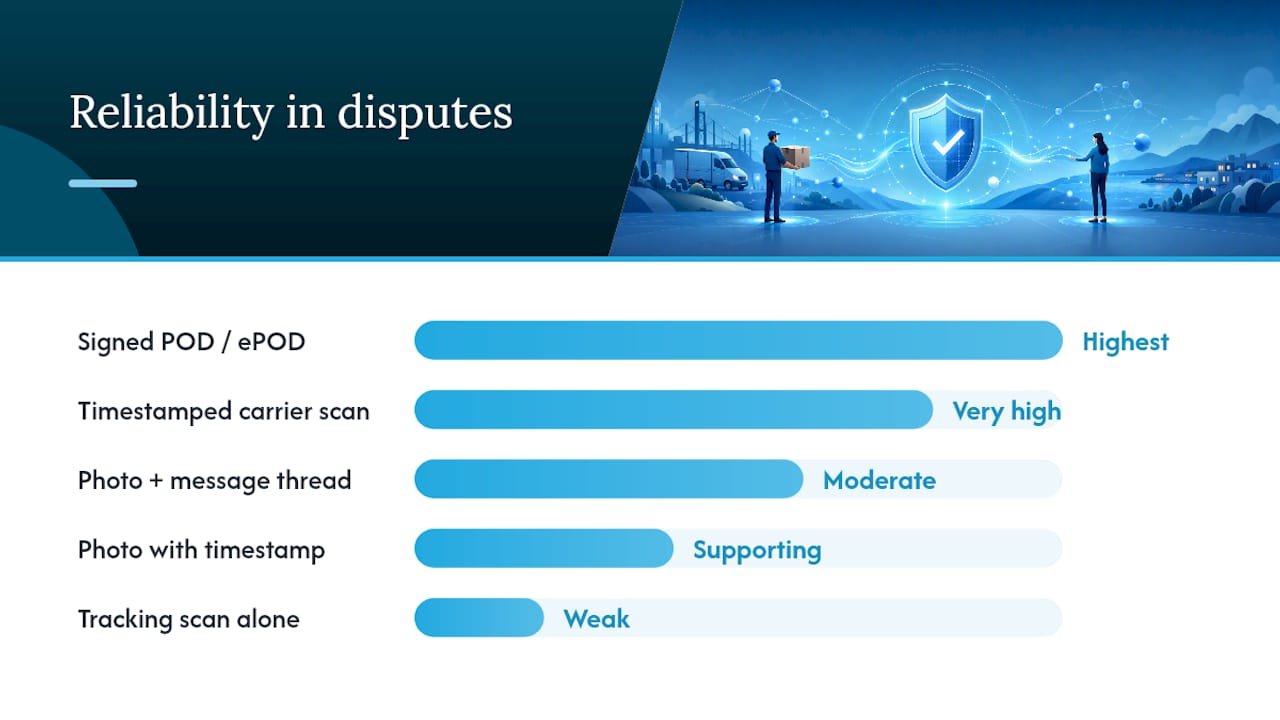
Where weaker evidence still earns its keep: a photo combined with a timestamped message thread showing the buyer confirming arrival can be enough for a low-value item dispute. Where it won’t help: a £2,000 item with only a courier’s generic tracking update and no signature. If the collection is high value or time-critical, don’t settle for tracking-only proof. Ask for the strongest option available before the collector arrives, not after.
How do you get proof of collection from marketplaces, Royal Mail, or a courier?
Getting proof isn’t automatic. Most platforms and carriers can supply it, but only if you ask at the right moment, before the job is booked, not after you’ve realised you need it.
For marketplace sales (in-person collection, eBay and similar):
- Pre-agree the collection code with your buyer before they arrive.
- Ask the buyer to sign a short handover note stating item, date, and condition.
- Take a photo of the item with the buyer present, if they’re comfortable with it.
- Keep every message confirming the collection time and outcome, don’t delete the thread once the sale is done.
For Royal Mail or postal-style collections:
- Request a signed receipt at the point of handover rather than accepting a standard proof-of-postage slip, which only confirms you posted something, not what happened to it afterwards.
- If using a collection service, check what documentation the service provides by default; some only log a scan, not a signature.
- Keep the confirmation email from booking a collection, it often contains the reference number you’ll need later.
For courier bookings (same-day or scheduled):
- Ask for an ePOD with signature capture as a condition of booking, not an optional extra.
- Confirm the driver will scan the item and log a timestamp against your booking reference.
- Request that the signed proof be emailed to you or uploaded to the booking portal the same day.
A short script helps here. Something like: “Please confirm the driver will capture a signature and provide timestamped proof of collection by email once the pickup is complete.” Send that in writing at booking, not as a verbal aside to whoever answers the phone.
Providers can upload a Proof of Collection once a job is marked complete, but that upload isn’t always automatic or mandatory. If you haven’t specified the format you need, don’t assume it’ll turn up in your inbox unprompted.
Pro Tip: If the item is high value, make the booking explicitly conditional on proof: tell the provider in writing that collection won’t be confirmed as complete until you’ve received the signed record. It costs you nothing and closes the single biggest gap sellers run into.
What should you do if you never receive proof of collection?
Act within the first 24 to 72 hours. Evidence gets harder to gather the longer you wait, and some carriers only retain internal logs for a limited window.
- Preserve every message with the buyer or carrier immediately, screenshot conversations even if you think you won’t need them.
- Contact the courier or platform and ask directly for the collection log, driver name, and timestamp tied to your booking reference.
- If a driver was involved, request their ID or the vehicle registration used for the job, most booking systems hold this even if it wasn’t shared with you upfront.
Build your case with whatever you can gather:
- Full message history with the buyer or recipient.
- Tracking history, even partial, showing movement after the claimed collection time.
- Any photos taken around the collection window, with metadata intact.
- Bank or payment records showing when funds cleared, which can corroborate a timeline.
- A witness statement if anyone else was present at handover.
Sellers should treat proof as something they must actively secure through the booking agreement rather than something that appears automatically, and that principle applies just as much after the fact as before it. If proof genuinely wasn’t captured, say so clearly and early rather than waiting to see if the issue resolves itself.
When you escalate: marketplaces generally want message threads and tracking data first, since that’s what their dispute systems are built to read. Carriers and insurers weigh signed documentation and driver logs more heavily, because that’s the record that establishes legal accountability for the handover. Know which audience you’re arguing to, and lead with the evidence that audience actually trusts.
How long does it take to get proof, and does it cost extra?
Most courier support teams respond to a proof request within the same working day to a few business days, depending on how busy their support queue is. Marketplaces tend to hold collection records for longer, often well beyond the standard dispute window, but policies vary by platform, so check the specific retention period before assuming an old sale is still traceable.
Costs come from a few predictable sources:
- Retrieval fees for pulling archived records outside the standard support process.
- Admin charges for reissuing a signed copy after the fact, rather than at the point of collection.
- Signature capture upgrades, where basic tracking is included free but a signed ePOD costs slightly more.
- Urgency premiums if you need same-day documentary evidence for an active dispute.
If the shipment is low value and low risk, a standard ePOD is usually enough. Pay for a certified copy only when you’re already in a formal dispute or the item’s value justifies the extra cost and delay.
How should you store and present proof of collection?
A messy proof file is nearly as bad as no proof at all if you can’t find the right document when a dispute lands on your desk weeks later.
A workable receipt template needs only five fields: item description, date and time of collection, the collector’s signed name, their role or company, and the booking reference number. Keep it that simple and it’ll cover almost every dispute scenario you’re likely to face.
For storage:
- Save digital copies as PDFs where possible, not screenshots, which strip out metadata and are easier to dispute as edited.
- Scan paper receipts at a resolution that keeps the signature legible, not just readable in thumbnail.
- Name files consistently: date, buyer name, item, reference number, so a search actually finds what you need.
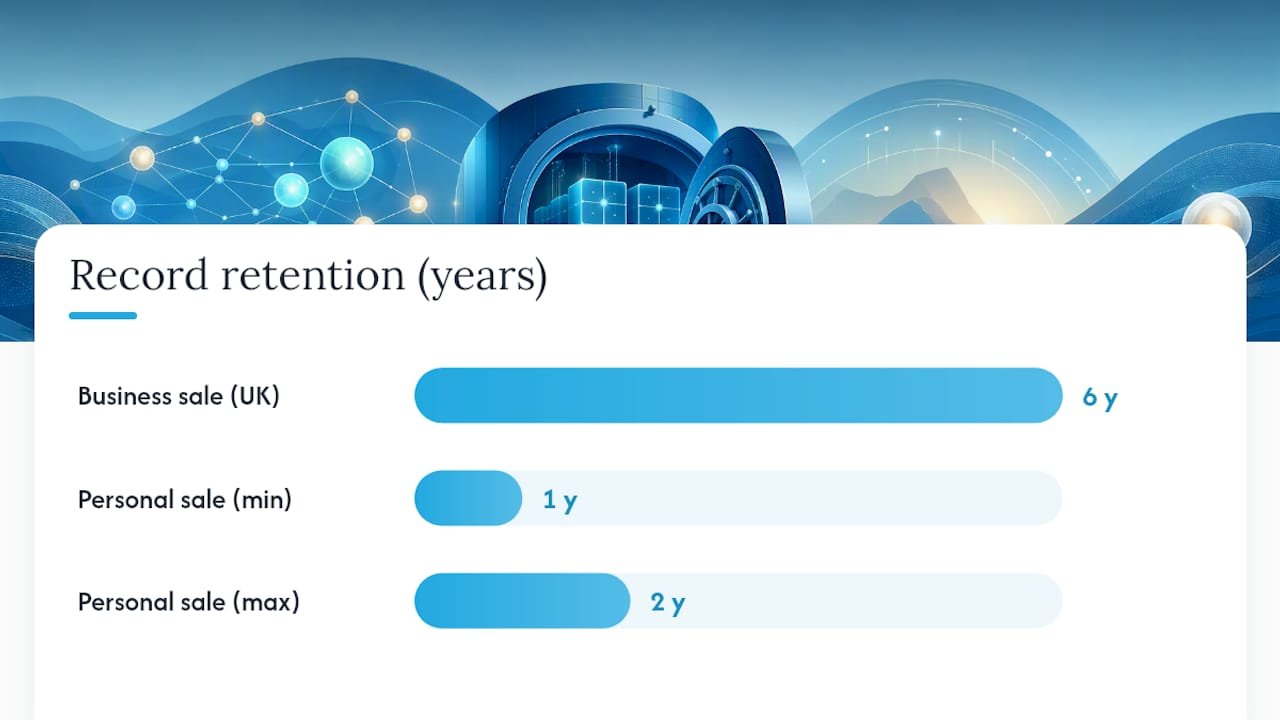
- Keep records for at least six years if the item relates to a business sale, in line with standard UK record-keeping practice for commercial transactions.
- For personal sales, a year or two covers most realistic dispute windows.
- Back up digital copies somewhere outside your phone alone, a cloud folder or email archive works fine.
Pro Tip: Tools that use AI-assisted document scanning can extract signatures and timestamps automatically from mobile captures, which is worth looking at if you handle enough collections that manual filing has become a chore.
How does FRP Haulage capture proof of collection on same-day jobs?
Every FRP Haulage pickup is built around the same principle this article has been arguing for: proof shouldn’t be an afterthought. On collection, the driver captures a signature, logs a timestamp, and ties both to your booking reference before the job is marked complete. That record becomes your signed Proof of Delivery, issued as standard rather than on request.
Before booking a same-day pickup, confirm in your notes:
- The exact collection window and address, since same-day slots move fast.
- Whether the item needs extra handling, high-value or fragile cargo often needs a note flagged in advance.
- That you want the signed proof emailed to you the same day, not left sitting in a portal.
Pro Tip: If the job is time-critical or high value, say so explicitly in the booking notes. It changes how the job gets flagged internally and how quickly you get your signed proof back. Readers who want that guaranteed, signed record for an urgent job can see how the process works on the FRP Haulage services page.
Why insisting on proof at booking beats chasing it afterwards
Most disputes over missing items don’t come down to who’s telling the truth. They come down to who has a signature and who has a story. I’ve seen enough of these arguments play out to know the outcome usually hinges on a decision made weeks earlier, at the point of booking, not at the point of the argument itself.
The habit worth building is small: ask for the signature before you release the item, not after something’s gone wrong. One seller avoided a costly dispute simply by insisting the courier capture an ePOD at collection rather than accepting a verbal confirmation over the phone. When the buyer later disputed the handover, the signed record ended the argument in minutes.
Need guaranteed signed proof today?
Everything above works if you plan ahead. If you don’t have that luxury, and a high-value or time-sensitive item needs collecting right now, FRP Haulage is built for exactly that gap. We collect within 60 to 120 minutes of your call, 24/7/365, and every job comes with a signed Proof of Delivery captured at the point of handover, no extra request required.
Choose this route when the item’s value, urgency, or compliance requirements mean you can’t afford a gap in your evidence trail, a business asset, a time-critical parcel, or anything where a dispute would be genuinely costly to lose. Unlike posting and hoping, or booking a standard courier and chasing paperwork afterwards, you get the signature captured as standard, the same day, with a reference number tied to your job from the start.
If that’s the situation you’re in, get a quote and book your collection through FRP Haulage’s same-day courier service now, and have your signed proof in hand before the day is out.
Frequently asked questions
What counts as valid proof of collection?
A signed handover record, an electronic signature equivalent, or a timestamped scan tied to a booking reference. A photo alone is supporting material, not standalone proof.
Is proof of collection the same as proof of postage?
No. Proof of postage only confirms you handed an item to a carrier’s network. Proof of collection confirms a specific person took a specific item at a specific time.
Does eBay provide proof of collection for local pickups?
Yes, through a unique collection code and scan system designed to protect both buyer and seller during in-person handovers.
Will Royal Mail give me a signed receipt for a collection?
You need to request it directly, since standard proof-of-postage slips don’t confirm what happens after posting. Ask for a signed receipt at the point of handover instead.
What should I do if a courier never sends proof of collection?
Contact them within 24 to 72 hours, request the collection log and driver details, and preserve all messages and tracking history in case you need to escalate a dispute.
Sources
- Why proof of delivery matters for your business | Pitney Bowes
- How to Obtain Proof of Collection or Delivery (POC & POD) : Truckit Support
- Offering collection in person