Use a pallet when you are moving standard boxed, stackable goods through a warehouse or retail supply chain. Use a crate when your load is fragile, high-value, irregularly shaped, or travelling through multiple handling steps on an international route. For UK shippers, that decision also pulls in EPAL/ISO footprint compatibility and, for any wood packaging leaving the country, ISPM 15 phytosanitary compliance. Start by asking two questions: how fragile is the load, and how many times will it be handled before it arrives?
Table of Contents
- Crate vs pallet: side-by-side comparison
- How do you decide: a quick checklist
- Materials, standard sizes and regulatory requirements
- What does it actually cost, and how does it affect your logistics?
- How to turn a pallet into a crate
- Key takeaways
- The view from the road
- Frphaulage handles both palletised and crated shipments across the UK
- Useful sources and standards
Crate vs pallet: side-by-side comparison
| Dimension | Pallet | Crate |
|---|---|---|
| Best for | Boxed, stackable, durable goods; retail and warehouse distribution | Fragile, high-value, oversized or irregularly shaped loads; multi-modal export |
| Protection level | Low to moderate; relies on secondary packaging | High; internal bracing, cushioning and full enclosure |
| Construction | Open platform; wood, plastic or metal | Enclosed shell; custom wood, plywood, metal or wood-free composite |
| Standard footprints | 1,200×800 mm (EPAL), 1,200×1,000 mm (ISO), 1,219×1,016 mm (GMA) | Custom-built; typically incorporates a pallet base |
| Load capacity | Varies by grade; EPAL static up to several thousand kilograms, dynamic up to one to two thousand kilograms | Determined by engineering design; can exceed pallet limits with reinforcement |
| Cost and reusability | Lower material cost; EPAL pool pallets are exchangeable and reusable | Higher upfront cost; custom crates are often one-way unless designed for return |
| Handling equipment | Standard forklift, pallet jack, racking | Forklift with correct tine spacing; may need crane or specialist lift points |
| Export / ISPM 15 | Wooden pallets require ISPM 15 treatment and marking for export; plastic/metal exempt | Wooden crates require ISPM 15; wood-free crates avoid this obligation entirely |
How do you decide: a quick checklist
Answer these questions before you book the vehicle:
- What is the cost of damage versus the cost of the crate? For high-value goods, the avoided damage usually offsets the crate cost on multi-stop international routes.
Use a pallet for: domestic retail replenishment, cross-dock LTL consolidation, same-day urgent consignments of boxed goods, and any load that fits the EPAL 1,200×800 mm grid cleanly.
Use a crate for: international container shipments of machinery, fine art or precision instruments, heavy components with awkward lift points, and any load where a single transit incident would be commercially catastrophic.
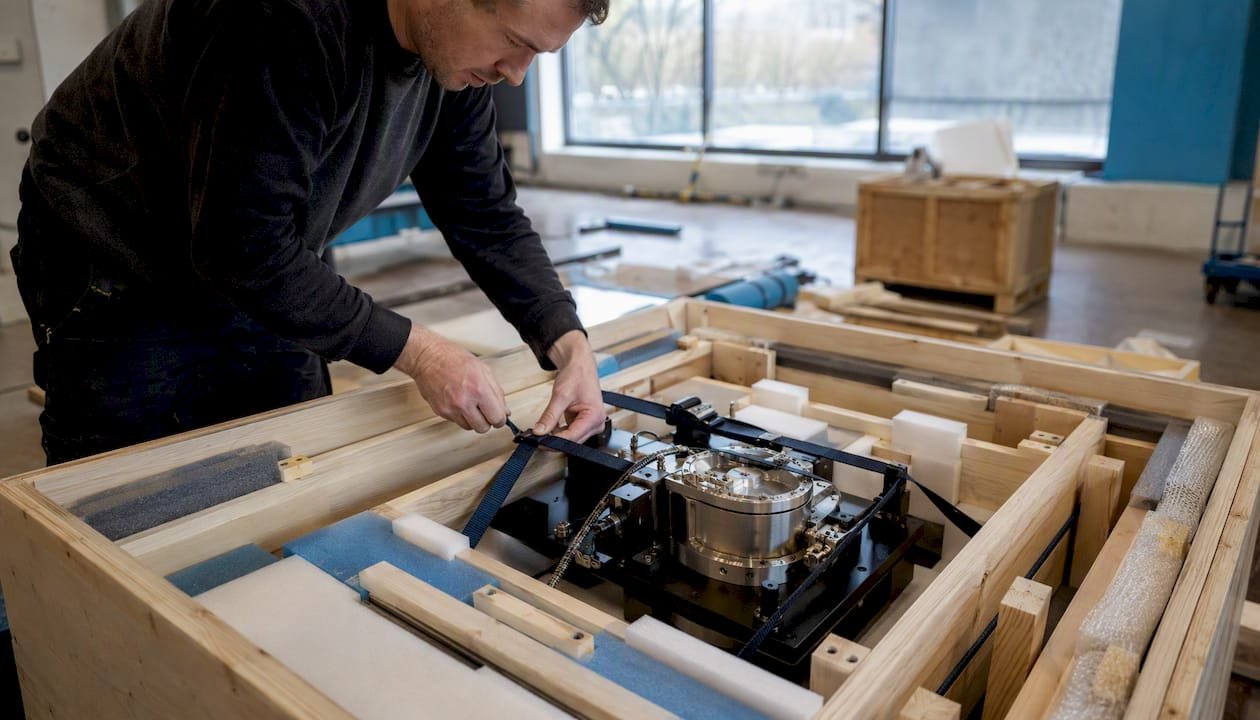
Pro Tip: Before booking collection, place the item on a flat surface and try to strap it securely without any enclosure. If it rocks, shifts or has no flat strapping surface, you need at minimum a crate base with side walls. If it passes that test, a well-strapped pallet with corner boards and stretch wrap is likely sufficient.
When the load is genuinely unusual — asymmetric weight distribution, fragile protrusions, or a value above five figures — commission a professional packaging engineer rather than adapting a standard crate design yourself.
Materials, standard sizes and regulatory requirements
ISO 6780 defines six flat-pallet footprints for intercontinental shipping, with no single worldwide standard. The table below shows the most relevant footprints for UK operations:
| Footprint | Dimensions | Primary use |
|---|---|---|
| EPAL / Euro | 1,200×800 mm | UK domestic, European distribution, EPAL pool |
| ISO 2 | 1,200×1,000 mm | ISO container export, UK industrial |
| GMA | 1,219×1,016 mm (48×40 in) | North American distribution |
ISPM 15 is the phytosanitary standard that governs all solid wood packaging material moving across international borders. Any wooden pallet or crate leaving the UK for a non-exempt destination must be heat-treated or fumigated and carry the IPPC mark. Failure to comply can result in consignment rejection at the border. Plastic and metal pallets, and wood-free crate panels, are exempt from ISPM 15 obligations entirely, which is one practical reason to consider them for regular export routes.
Material trade-offs in brief: Wood is repairable, widely available and accepted by EPAL pool operators, but carries ISPM 15 obligations for export. Plastic is lighter, hygienic and ISPM 15-exempt, but costs more upfront and cannot be repaired in the field. Metal handles the heaviest loads and is the most durable, but adds significant tare weight. Wood-free crating using composite or honeycomb panels reduces shipment weight and sidesteps phytosanitary requirements, making it worth considering for regular international crated freight.
What does it actually cost, and how does it affect your logistics?
The direct cost of a standard EPAL pallet is modest, and pool participation means you often exchange rather than buy. A custom wooden crate is a different order of magnitude: materials, labour to build and pack, and the additional tare weight all feed into the final freight charge.
Weight is the most underestimated cost driver. A heavy timber crate adds to the chargeable weight of the consignment, and on a same-day or express service that cost is immediate. Traditional wooden crates add significant weight; wood-free alternatives can reduce this, though the panel cost is higher.
Operationally, crates take longer to load and unload. A pallet moves in seconds with a pallet jack; a crated load may require a crane, specialist slings or a two-person lift with specific attachment points. For same-day and short-haul operations, that handling time directly affects collection windows and vehicle turnaround.
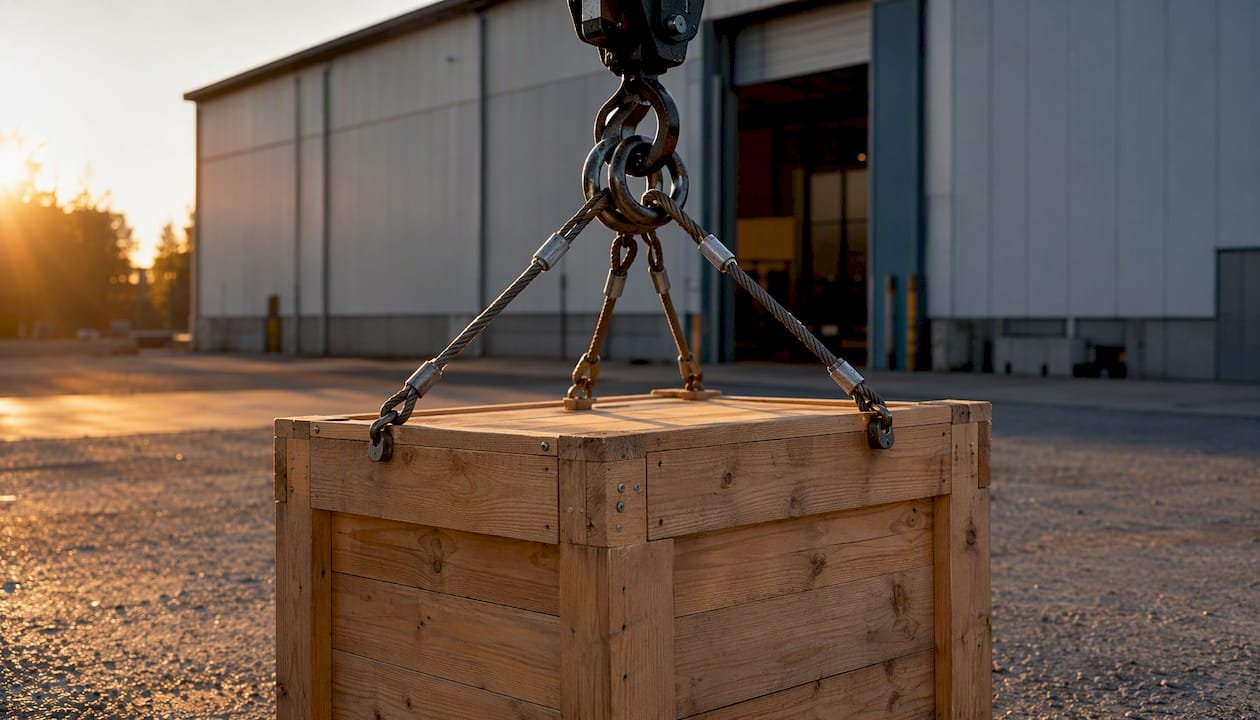
Reusability shifts the economics over time. EPAL pallets circulate through the pool system, so the per-trip cost falls with volume. One-way crates are a sunk cost per shipment. If you are crating the same product repeatedly, designing a returnable crate with folding sides and stacking feet can recover that investment within a modest number of cycles.
Pro Tip: When booking a same-day collection for a crated load, tell the driver the gross weight including packaging, the external dimensions, and whether specialist lifting equipment is needed at either end. Surprises at the door cost time and can delay the consignment.
How to turn a pallet into a crate
Converting a sound EPAL or ISO pallet into a basic protective crate is practical for short runs and lighter loads. Follow these steps:
- Verify ISPM 15 compliance — If the shipment is leaving the UK, confirm that all timber used carries the IPPC treatment mark before sealing.
Commission a professional crating service when the load exceeds your structural confidence, when the item is irreplaceable, or when the route involves sea freight with extended transit times.
Key takeaways
Pallets suit standard, throughput-driven UK logistics; crates are the right call when protection, export compliance or load irregularity outweighs the cost and handling overhead.
| Point | Details |
|---|---|
| Default to EPAL for UK domestic | The 1,200×800 mm Euro pallet fits UK racking, trailers and the EPAL pool. |
| Crate when protection is critical | Fragile, high-value or irregularly shaped loads need internal bracing, not just a flat platform. |
| Check ISPM 15 before export | Any solid wood packaging leaving the UK requires phytosanitary treatment and IPPC marking. |
| Weight drives freight cost | Timber crates add tare weight; wood-free alternatives reduce this on express and same-day services. |
| Frphaulage for urgent collections | Frphaulage collects palletised and crated loads across the UK within 60–120 minutes, with signed Proof of Delivery. |
The view from the road
There is a tendency in logistics planning to treat packaging as a last-minute detail, something to sort out after the vehicle is booked. The crate-versus-pallet decision is actually one of the first things to settle, because it determines vehicle type, handling equipment, collection window and, for exports, regulatory compliance.
The mistake I see most often is under-packaging a high-value load to save on crate cost, then absorbing a damage claim that dwarfs what a proper crate would have cost. The arithmetic is straightforward: if the item is worth £10,000 and a custom crate costs £300, the crate pays for itself the first time it prevents a single incident. The hesitation usually comes from not having a reliable carrier who can handle the crated load quickly once it is built. That is a logistics problem, not a packaging problem.
For same-day and urgent consignments specifically, the packaging decision also affects how fast collection can happen. A well-strapped EPAL pallet can be collected within minutes of a call. A crated load with unclear lift points and no declared weight slows everything down at the door. The fix is simple: know your dimensions, know your gross weight including packaging, and tell the driver before they arrive.
Frphaulage handles both palletised and crated shipments across the UK
When the packaging decision is made and the load is ready, the next question is who picks it up and how fast.
Frphaulage collects palletised and crated freight anywhere across the UK, typically within 60–120 minutes of your call, 24 hours a day, 365 days a year. Every consignment, whether a standard EPAL pallet or a custom-built crate carrying high-value machinery, travels with a signed Proof of Delivery. The team handles high-value and specialist cargo as a matter of routine, so there are no surprises at the door when the load is unusual.
To book, have the external dimensions, gross weight (including packaging), and any specialist handling requirements ready before you call. If you are unsure whether your load needs a crate or a pallet, the team can advise during the booking call. Read the same-day courier guide for guidance on what to prepare, then request a quote to get a collection time confirmed.
Useful sources and standards
- Standard pallet sizes (SizeMarker)
- GMA vs EUR pallet sizing guide (PackCalc)
- Pallet sizes (PalGuru)
- When do you need a crate instead of a pallet? (Atlas Pallets)
- Crate vs pallet: which packaging option should you choose? (Container Exchanger blog)
- What’s the difference between pallet, skid and crate? (Freightcom blog)